Build Smart, Save Big: The Real Math Behind Sustainable Homes in Pueblo Grande
There's a version of sustainable home building that lives on design blogs and architecture award shortlists — all sleek angles and aspirational price tags. And then there's the version that's actually happening in Pueblo Grande, where homeowners are making practical, sometimes unglamorous choices that quietly slash their utility bills and future-proof their properties against a climate that's only getting more demanding.
The two versions aren't mutually exclusive. But in this part of the Southwest, sustainability tends to be driven less by aesthetics and more by a very clear-eyed look at the economics.
Why Pueblo Grande Is Ground Zero for This Conversation
The region's climate creates a compelling case for sustainable building almost by default. Summer temperatures that routinely push past 100 degrees, annual rainfall that can be measured in single digits, and a grid that strains during peak cooling months — these aren't abstract environmental concerns. They're monthly bills and real-world discomfort for anyone whose home isn't built to handle them.
"People who move here from wetter, milder climates are often shocked by their first summer utility statement," says Marcus Telles, a green building contractor who's been working in the Pueblo Grande area for over a decade. "That shock is usually what opens the conversation about doing things differently."
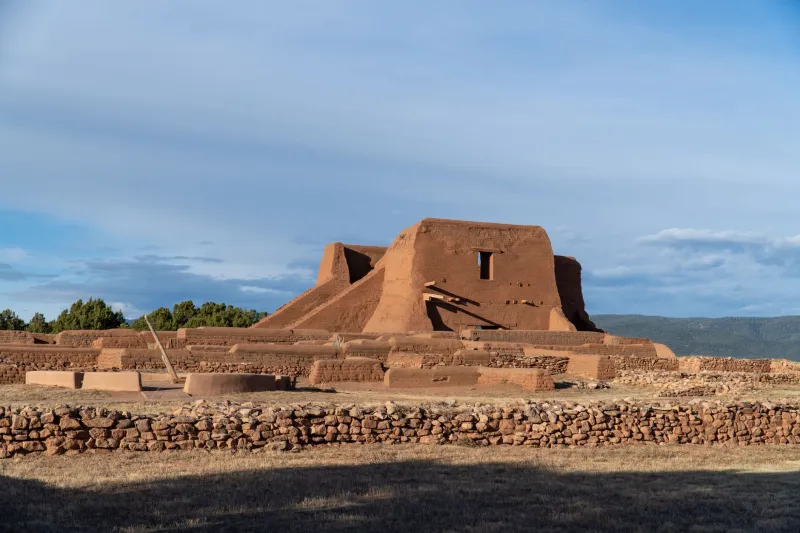
But Telles is quick to point out that sustainable building in the Southwest isn't a new concept — it's actually a return to tradition. The region's Indigenous and early Spanish colonial builders understood passive cooling, thermal mass, and site orientation long before those terms showed up in architecture school curricula.
"Adobe walls that are two feet thick aren't just an aesthetic choice," he explains. "They absorb heat during the day and release it slowly at night, which is exactly what you want in a desert climate. Modern builders are essentially rediscovering what the land already taught people centuries ago."
Passive Solar: The Upgrade That Pays You Back
Of all the sustainable building strategies gaining traction in Pueblo Grande, passive solar design offers some of the most compelling return-on-investment data — particularly because much of it costs little to nothing when incorporated during initial construction or a major renovation.
The basic principle is straightforward: orient the home so that south-facing windows capture winter sunlight for natural heating, while deep roof overhangs block the higher summer sun and prevent overheating. Pair that with thermal mass materials — concrete floors, stone countertops, brick or adobe walls — and the home itself becomes a climate regulation system.
Homeowner Patricia Salazar renovated her 1970s ranch-style home in Pueblo Grande three years ago with passive solar principles as a central focus. The project included repositioning a major window bank, adding exterior shading structures, and replacing a standard concrete slab with polished concrete that absorbs and redistributes heat.
"My summer electricity bills dropped by almost 35 percent after the renovation," she says. "The payback period on the passive solar components specifically was under four years. Everything after that is just savings."
Telles estimates that for new construction, incorporating passive solar design from the start adds roughly 1 to 3 percent to total build costs — an investment that typically pays back within five to eight years depending on energy prices and usage patterns.
Greywater Systems: The Upgrade Nobody Talks About Enough
In a region where water scarcity is a present-tense problem rather than a future-tense concern, greywater systems are quietly becoming one of the smartest investments a Pueblo Grande homeowner can make.
A greywater system captures water from sinks, showers, and laundry — water that would otherwise head straight to the sewer — and redirects it for landscape irrigation or toilet flushing. The installation cost for a basic laundry-to-landscape system runs between $500 and $2,000 depending on home layout and system complexity. More sophisticated whole-house systems can run higher, but the water savings in a drought-prone environment add up fast.
"A typical household can offset 30 to 50 percent of outdoor water use with a properly installed greywater system," says Elena Vasquez, a water systems consultant who works with homeowners and builders across the region. "In an area where water rates are rising and drought restrictions are becoming more common, that's not just an environmental statement — it's a hedge against future costs."
New Mexico's relatively permissive greywater regulations make the installation process more straightforward than in many other states, which lowers the barrier to entry for homeowners considering the upgrade.
Xeriscaping: The Yard That Actually Fits the Climate
Lawn care is one of the more quietly expensive habits that newcomers bring to the Southwest, and it's one of the first things experienced Pueblo Grande homeowners tend to abandon.
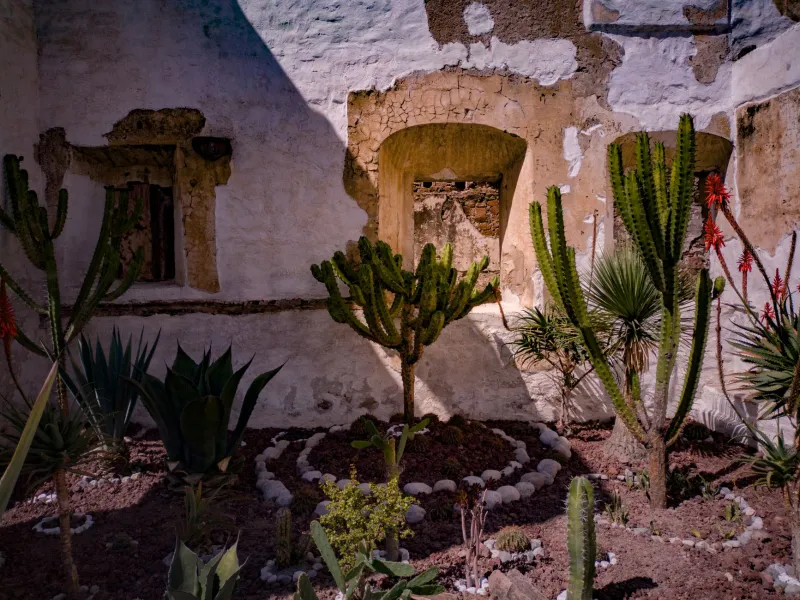
Xeriscaping — landscaping designed around drought-tolerant native plants that require little to no supplemental irrigation once established — can reduce outdoor water use by 50 to 75 percent compared to a conventional grass lawn. In a region where outdoor irrigation can account for 30 to 60 percent of total household water consumption, that's a substantial reduction.
The upfront cost of a full xeriscape installation varies widely based on yard size and plant selection, but many homeowners find that the elimination of ongoing lawn maintenance costs — mowing, fertilizer, irrigation system upkeep — offsets the initial investment within two to four years.
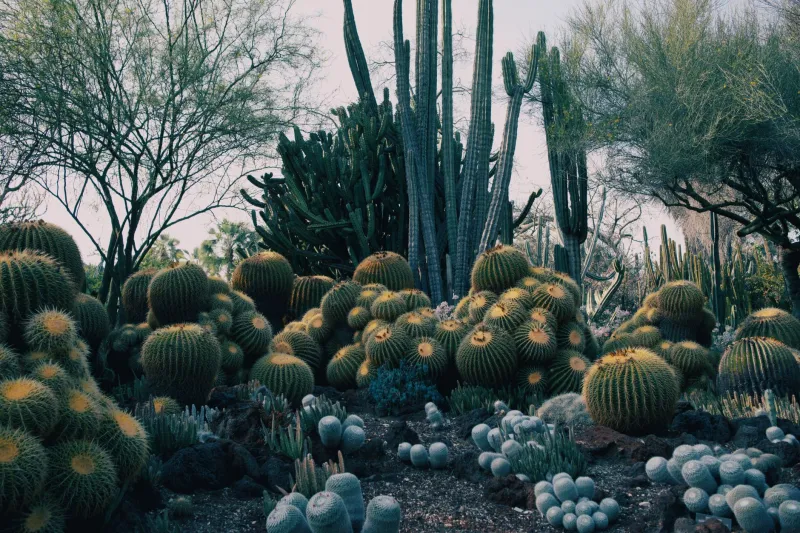
Beyond the economics, there's a quality-of-life argument that converts even the most lawn-loyal transplants. Native plants like desert willow, agave, and various species of sage and penstemon bloom in ways that a Kentucky bluegrass lawn simply can't match, and they support local pollinators in ways that matter increasingly in an ecologically stressed environment.
What Buyers Should Ask Before They Sign
For anyone shopping for a home in Pueblo Grande with sustainability and long-term operating costs in mind, a few questions worth adding to your due diligence checklist:
What's the home's HERS rating? The Home Energy Rating System score gives you a standardized measure of energy efficiency. A lower number is better, and the rating can help you compare properties on an apples-to-apples basis.
Is there an existing greywater system or solar installation? These features don't always show up prominently in listings, but they can meaningfully change the total cost of ownership.
What's the orientation of the home? South-facing living spaces and windows are a significant passive solar advantage in this climate. It's worth pulling up a compass during your showing.
What's the landscaping water demand? Ask the seller for water bills across a full calendar year. A home with mature xeriscaping will show dramatically different summer irrigation costs than one with thirsty conventional landscaping.
Building or buying sustainably in Pueblo Grande isn't about virtue signaling. It's about understanding the climate you're living in and making choices that work with it rather than against it. The savings are real, the payback periods are measurable, and in a region where summers are only getting hotter and water only getting scarcer, the math gets more compelling every year.