Old Souls, Smart Walls: How Pueblo Grande Builders Are Reinventing the Southwest Home
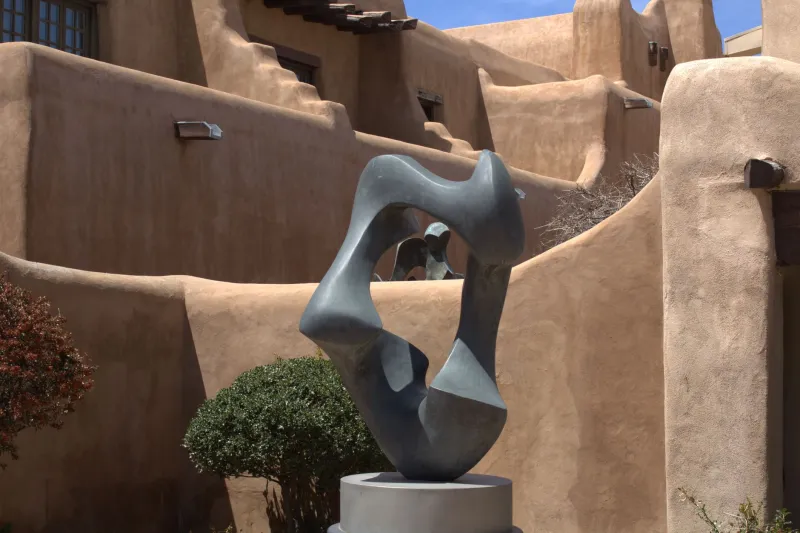
Stand in front of a well-built home in Pueblo Grande and you'll notice something. The lines are low and honest. The walls look like they've always been there. The colors — ochre, terracotta, the warm gray of desert stone — seem less like a design choice and more like an inevitability, as though the land simply decided what the house should look like.
Now step inside. The thermostat learns your schedule. The windows tint automatically at peak sun hours. The solar array on the roof sends excess power back to the grid. The kitchen is exactly what you'd see in a high-end design magazine.
This is the Pueblo Grande paradox, and it's one of the most interesting things happening in residential architecture anywhere in the American Southwest right now.
The Tradition Worth Keeping
To understand what contemporary builders are working with — and working from — you have to appreciate what regional architecture has always been trying to do.
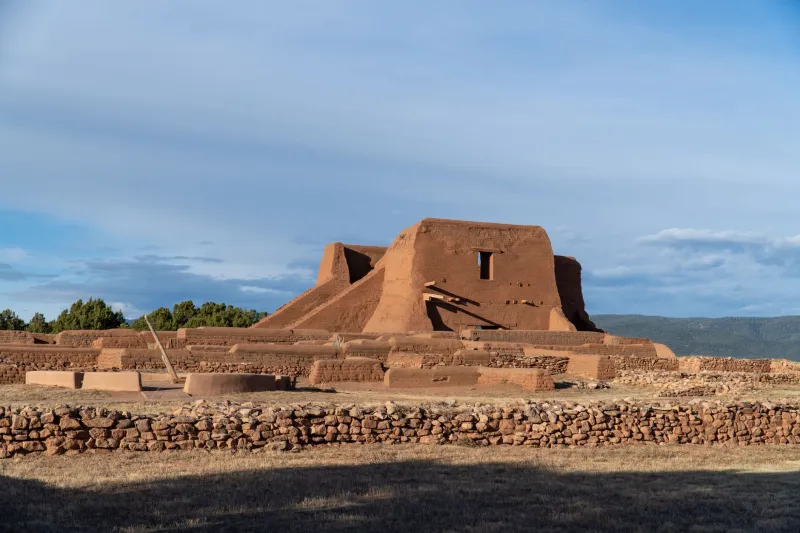
Pueblo revival and territorial styles weren't invented by designers sitting in studios. They evolved over centuries as practical responses to a demanding environment. Thick adobe or rammed earth walls absorb heat during the day and release it slowly at night, naturally moderating interior temperatures. Flat or low-pitched roofs minimize wind resistance. Portales — those shaded front porches — create transitional outdoor spaces that block direct sun while allowing airflow. Small, deeply recessed windows limit solar gain during summer months.
These weren't stylistic flourishes. They were survival strategies that happened to look beautiful.
"The old builders understood passive design at an intuitive level," says architect Renata Villanueva, whose firm has been working in the Pueblo Grande area for over a decade. "Our job isn't to replace that knowledge — it's to carry it forward and amplify it with the tools we have now."
What Modern Innovation Actually Adds
The tools Villanueva is referring to are considerable. And when they're applied thoughtfully — layered onto a foundation of sound traditional design rather than used as a substitute for it — the results can be remarkable.
Take thermal mass, one of the core principles of traditional Southwest building. Adobe walls have always worked as natural heat batteries. Today's builders are enhancing that effect with phase-change materials embedded in wall systems, insulated concrete forms that dramatically outperform standard framing, and exterior cladding options that mimic the look of traditional stucco while providing superior weatherproofing. The aesthetic is unchanged. The performance is another level entirely.
Passive cooling gets a similar upgrade. Clerestory windows, strategically placed to draw hot air upward and out of living spaces, are now paired with automated smart vents that open and close based on interior temperature readings. Roof overhangs — always a staple of territorial design — are now calculated with precision software to block summer sun angles while allowing lower winter light to warm interior floors. The house thinks, in a sense, in ways its predecessors couldn't.
And then there's solar. In a region that logs more than 300 days of sunshine annually, photovoltaic integration isn't just a feel-good add-on — it's a genuinely smart financial decision. New Pueblo Grande developments are increasingly offering solar as a standard feature rather than an upgrade, and battery storage systems are becoming common enough that some homeowners are functionally off-grid for portions of the year.
Smart Homes That Don't Feel Like Gadgets
One of the more interesting design challenges facing builders today is how to incorporate smart home technology without making a home feel like a tech showroom. Nobody wants to live in a place that feels like it needs a user manual.
The best builders in Pueblo Grande are solving this by making the technology invisible — or very nearly so. Smart lighting systems that adjust color temperature throughout the day are tucked into fixtures that look like they could have come from a Santa Fe design shop. Whole-home automation hubs are integrated into built-in cabinetry that reads as traditional millwork. Radiant floor heating — quietly controlled by a learning thermostat — disappears entirely beneath saltillo tile or polished concrete.
"The goal is that you feel the effect without seeing the mechanism," says developer Marco Espinoza, whose company has completed three communities in the Pueblo Grande area in the past five years. "You walk in and the house just works. It's comfortable, it's efficient, it's beautiful. The technology is doing its job when you forget it's there."
Materials That Honor the Land
Beyond structure and systems, material choice is where the conversation about authenticity gets most interesting. Traditional Southwest building used what was local — adobe clay, timber from nearby forests, stone from the surrounding landscape. That philosophy is experiencing a genuine revival, though it's being applied with modern sensibility.
Reclaimed wood beams — vigas — remain a signature element in Pueblo Grande homes, sourced from salvage operations and given new life as ceiling features. Compressed earth block, a modern descendant of traditional adobe, is gaining traction among builders who want the authentic thermal and aesthetic properties of earthen construction with tighter dimensional tolerances and improved moisture resistance. Locally quarried stone is showing up in accent walls, outdoor kitchens, and fireplace surrounds.
Even the landscaping philosophy mirrors this ethos. Native plant species — desert willow, agave, palo verde — replace thirsty lawns, cutting water consumption dramatically while creating outdoor spaces that look like they belong here. Drip irrigation systems managed by smart controllers adjust watering schedules based on real-time weather data. The yard becomes an extension of the home's efficiency story.
Why It Matters to Buyers
All of this would be an interesting architectural conversation if buyers didn't care. But they do — increasingly so.
Buyers relocating to Pueblo Grande from other parts of the country are often drawn first by the aesthetic. There's something genuinely moving about a home that looks like it grew out of the earth it sits on. But they stay interested when they learn what's underneath that aesthetic — the lower utility bills, the reduced maintenance demands, the durability of materials chosen for this specific climate.
And for buyers with a longer view, the combination of traditional design principles and modern efficiency systems represents something else: a home that's built for the future of this region, not just its past.
"People come in expecting to choose between character and convenience," says Villanueva. "When they realize they don't have to choose — that's usually when they start talking seriously about buying."
In Pueblo Grande, the old ways and the new ones have found a way to sit comfortably together, thick walls and all.