When Life Slows Down, the Good Stuff Finally Has Room to Grow
For most people, the dream hobby lives in a drawer somewhere. Maybe it's a half-finished watercolor set still in the packaging, a guitar that hasn't been tuned since 2019, or a woodworking plan printed off Pinterest and buried under a pile of mail. Life — specifically, the expensive, exhausting version of it — has a way of crowding out the things we actually want to do.
But spend a Saturday afternoon driving around Pueblo Grande and you'll notice something different. Garages converted into leather workshops. Backyard sheds that smell like fresh cedar shavings. Driveways with trailers loaded up for weekend guided hikes. These aren't weekend warriors performing a fantasy — they're people who moved here, cut their overhead, and watched the hours open up like a desert sky.
The math, it turns out, is pretty simple.
What Happens When Your Mortgage Isn't Eating You Alive
Let's talk numbers for a second, because this whole conversation starts there. A homeowner paying $3,200 a month in a coastal metro is doing something fundamentally different from someone whose Pueblo Grande mortgage clocks in at $1,400. That $1,800 gap doesn't just mean more money in a savings account — it means choices. It means working fewer hours, saying no to the side hustle, or finally funding that ceramics kiln you've been pricing out for three years.
Residents here talk about this shift constantly. There's a version of arrival that has nothing to do with square footage or school districts. It's the moment when you realize you're not just surviving the month — you're actually living in it.
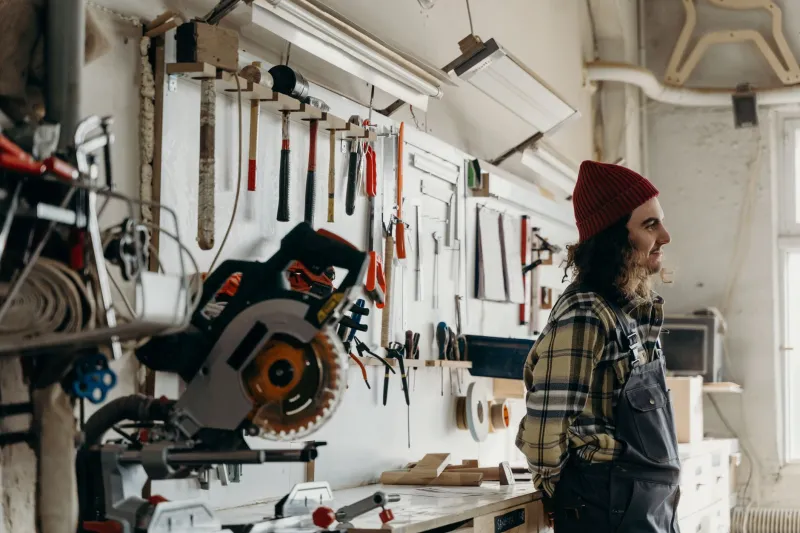
For Marcus, a former marketing director who relocated from Denver two years ago, that realization came about six months after closing on his Pueblo Grande home. "I had this whole woodworking thing I'd wanted to do since my dad taught me the basics when I was twelve," he says. "In Denver, my garage was storage. Here, I converted it in about three weekends. Now I make furniture. Real furniture. People actually buy it."
That last part isn't uncommon either. What starts as a hobby has a funny way of becoming something more when you have the space and time to actually get good at it.
The Studio, the Shop, the Side Business
One of the quieter economic stories in Pueblo Grande is the number of residents who've turned passion projects into modest income streams — not because they needed the money, but because they finally had the bandwidth to develop a skill to that level.
Artists who spent decades squeezing in studio time after 10 p.m. are now painting in natural light. Craftspeople who sold at two farmers markets a year are now running small e-commerce operations out of their spare rooms. A handful of outdoor enthusiasts have even launched part-time guide services, leading desert hikes and canyon tours for visitors who want something more personal than a group tour bus.
The infrastructure for this kind of life exists here in a way it simply doesn't in denser, pricier markets. Properties with workshop-ready garages and detached casitas are common. Lot sizes leave room for a greenhouse, a kiln shed, or even a small recording space without it being a massive renovation project. And zoning in many parts of the area is friendly to small home-based operations — something that matters enormously when you're trying to turn a hobby into something that pays for itself.
Time Is the Real Currency
Money matters, but the residents who seem most transformed by the Pueblo Grande move aren't necessarily the ones who saved the most on housing. They're the ones who got their time back.
Long commutes are largely a non-issue here. Traffic that eats an hour out of your day in Phoenix or Albuquerque barely registers. Errand culture is simpler. The social pressure to spend — on restaurants, events, keeping up appearances — is notably lower. All of that adds up to hours that belong to you again.
Sarah, who moved here from the Bay Area after a decade of tech-sector burnout, puts it this way: "I used to joke that I'd learn to throw pottery when I retired. I'm 38. I've been throwing pottery every Tuesday and Thursday morning for a year and a half. I'm not retired. I just live somewhere that doesn't steal all my time."
Her studio is a converted sunroom on the back of her house. It faces east, which means good light in the mornings. She sells pieces at a local shop downtown and ships a few things through Instagram. None of it is life-changing income, but that's not really the point.
The Hobby as Home Upgrade
There's a home-value angle here that doesn't get talked about enough. Dedicated hobby spaces — a proper workshop, a finished art studio, an outdoor kitchen built for serious cooking — are increasingly attractive to buyers in this market. Homeowners who invest in a well-done garage conversion or a thoughtfully designed outbuilding aren't just building a space for themselves. They're adding a feature that resonates with the exact type of buyer Pueblo Grande tends to attract: people who came here precisely to have room for this kind of life.
It's a different calculation than what you'd make in a hot urban market, where every renovation dollar is weighed against resale comps in a dense neighborhood. Here, you're building for a lifestyle, and the market increasingly reflects that lifestyle's appeal.
Getting Here Is Step One
None of this is automatic, of course. Moving to Pueblo Grande doesn't hand you a finished pottery studio or a woodworking business. What it does is remove the structural obstacles that make those things feel perpetually out of reach.
The lower cost of living creates financial margin. The pace creates mental margin. The space — both physical and cultural — creates permission to actually try something without feeling like you're being irresponsible.
That combination is rarer than people realize. Most places offer one or two of those things. Pueblo Grande has a way of delivering all three at once, which is why the garage workshops and backyard studios keep multiplying, and why the people inside them tend to look like they're exactly where they're supposed to be.