Canvas and Clay: The Creative Wave Reshaping Pueblo Grande One Studio at a Time

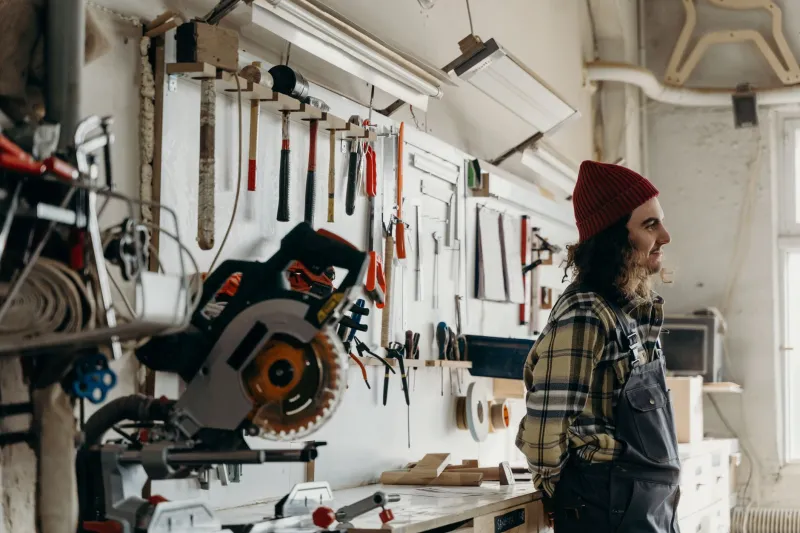
Photo by Photo by Darla Hueske on Unsplash on Unsplash
Visit Pueblo Grande on a Tuesday morning and you might walk past a converted garage where a ceramicist is firing her third kiln load of the week. Down the road, a former storage building has become a printmaking studio shared by four artists who met online and ended up as neighbors. Around the corner, a muralist who used to rent a closet-sized workspace in a major city now has a 1,200-square-foot studio attached to a house she actually owns.
This isn't a scene that was engineered. It emerged organically, driven by economics and instinct — and it's quietly changing what Pueblo Grande is becoming.
Why Artists Are Following the Sun Southwest
Creative professionals have always been sensitive to cost. Studio space in cities like Los Angeles, Brooklyn, or Chicago has become so expensive that working artists are increasingly priced out of the very places that once cultivated them. The pandemic accelerated a trend that was already building: if your work can happen anywhere, why are you paying Manhattan rent for it?
Pueblo Grande offers something that's increasingly rare in the American creative economy: affordable square footage with room to make things. A property here that might be listed as a three-bedroom home with a detached workshop is, to a sculptor or a furniture maker, a live-work compound that would cost four times as much anywhere near a major arts scene.
"I did the math about six times before I believed it," says James Whitfield, a metalwork artist who relocated from Austin two years ago. "I'm paying less for my mortgage and studio combined than I was paying for a shared studio space alone back in Texas. And I own it."
The Space Equation
For visual artists, craftspeople, and makers of all kinds, space isn't a luxury — it's a professional requirement. You can't throw large-scale ceramics in a one-bedroom apartment. You can't build furniture in a shared co-working space. The work demands room, and room demands money, and in most American cities, that math has become brutal.
Pueblo Grande's property profile is genuinely well-suited to creative use. Lots tend to be larger than their urban equivalents. Detached structures — garages, outbuildings, casitas — are common and often adaptable. Zoning in parts of the area is relatively flexible, allowing home-based studios and small-scale production in ways that many municipalities don't permit.
The landscape itself plays a role too. Natural light in the Southwest is extraordinary — bright, directional, and consistent in a way that painters and photographers talk about almost reverentially. Several artists interviewed for this piece mentioned the quality of desert light as a genuine factor in their decision to relocate.
"I've worked in studios in four different cities," says painter Elena Marquez, who moved to Pueblo Grande from Chicago three years ago. "The light here is different in a way I can't fully explain. It's clearer. It does something to color that I'd never experienced before. That sounds abstract, but it's real."
A Community That Builds on Itself
One of the more interesting dynamics in Pueblo Grande's emerging arts scene is how self-reinforcing it's becoming. Artists arrive, establish themselves, and then become part of the reason the next wave of artists comes. Informal networks form. Open studio events draw visitors from neighboring cities. A local gallery that opened two years ago now has a waiting list of artists seeking representation.
This kind of creative clustering has economic consequences that go well beyond the art world. Arts districts and creative communities consistently drive broader neighborhood revitalization — attracting restaurants, cafes, boutique retail, and the kind of foot traffic that supports small businesses across sectors.
"We're not trying to be Santa Fe," says one longtime Pueblo Grande resident and community organizer who's been involved in local arts initiatives. "We're something different. It's more grassroots here, more experimental. People are figuring it out as they go, which actually makes it more exciting."
The Live-Work Property Market
Real estate professionals in the area have noticed the shift in who's calling and what they're asking for. Inquiries about properties with detached studios, workshop potential, or live-work configurations have increased noticeably over the past few years. Buyers who identify as artists or creative professionals are arriving with a specific vocabulary: ceiling height, natural light, electrical capacity, floor load for heavy equipment.
"I had a textile artist call me asking specifically about ceiling height in the secondary structure," recalls one local agent. "She needed at least twelve feet for her loom setup. We found it. She closed in six weeks."
For sellers, properties with studio-adaptable outbuildings are increasingly commanding attention from a buyer pool that didn't exist in this market a decade ago. A detached garage that might once have been marketed purely for car storage is now described — accurately — as potential studio space, and it's attracting offers from buyers who are willing to pay for that possibility.
The Economic Ripple Effect
Beyond the real estate angle, the artist migration is creating economic texture in Pueblo Grande that's hard to replicate through conventional development. Working artists generate income streams that stay local: they hire local contractors to build out studios, they buy supplies from regional vendors, they teach workshops that bring visitors to town, and they create products that get sold at markets, through galleries, and online.
Several artists who've established themselves here have already pivoted into teaching, running workshops out of their studios for both locals and visitors who drive in from neighboring cities. That's not a side hustle — for some of them, it's become a significant revenue stream that wouldn't have been possible without the affordable property that gave them space to work in the first place.
"I offer a weekend ceramics intensive twice a month," says ceramicist Dana Reyes, who has lived in Pueblo Grande for four years. "People come from three or four hours away. They stay overnight, they eat at local restaurants, they buy things at the market on Sunday. I'm not just supporting myself — I'm pulling in outside dollars."
What This Means for Homebuyers
If you're considering Pueblo Grande and you have any creative dimension to your life — even if you'd never call yourself an artist — the community taking shape here is worth paying attention to. It signals a certain kind of energy: curious, entrepreneurial, willing to build something new rather than just inherit what already exists.
For buyers who are working artists, the opportunity is even more direct. The window to acquire live-work properties at current price points won't stay open indefinitely. As the creative community grows and the region's reputation develops, demand for studio-ready properties will increase — and prices will follow.
A Place That's Still Becoming Itself
What makes Pueblo Grande's arts scene genuinely compelling isn't that it's arrived — it's that it's arriving. The galleries are opening, the studios are filling, the community is forming, and the story isn't written yet. For the artists who showed up early, that's exactly the point.
They didn't come to join a scene. They came to make one.