More Life, Less Price Tag: The Real Story Behind Pueblo Grande's Unlikely Edge
There's a lazy assumption that follows affordable housing markets around like a shadow: if the homes are cheaper, something must be missing. Maybe the schools are underfunded. Maybe the restaurants close at eight. Maybe the nearest hospital is forty-five minutes away. People hear "lower home prices" and their brain quietly fills in the blanks with trade-offs.
In Pueblo Grande, those blanks are mostly fiction.
What's actually happening here is rarer than most people realize — a community that somehow managed to build genuine quality of life without letting the cost of entry spiral out of reach. And once residents figure that out, they tend to stop calling it a bargain and start calling it home.
The Numbers That Start the Conversation
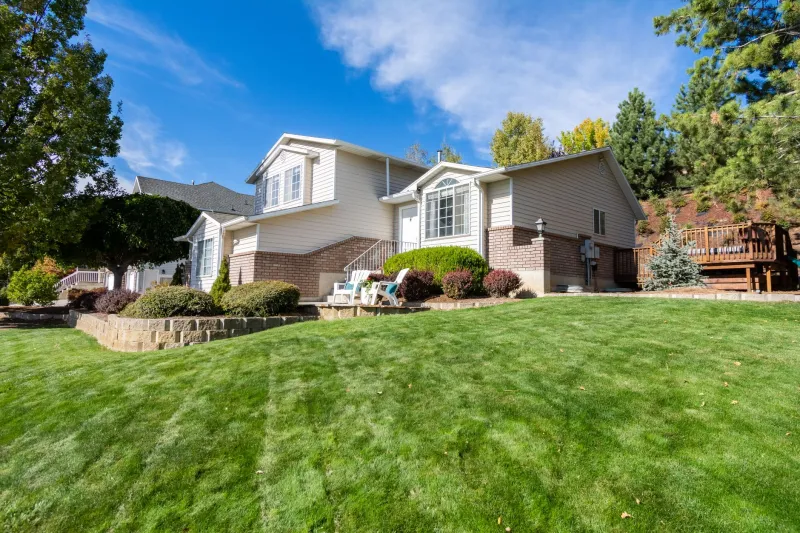
Let's get the comparison out of the way, because it matters. Median home prices in Scottsdale hover well above $700,000. Santa Fe regularly clocks in near $600,000. Even Albuquerque has crept northward in recent years, leaving first-time buyers scrambling. Pueblo Grande, by contrast, still offers solid single-family homes in established neighborhoods at prices that feel almost anachronistic — the kind of numbers that make people double-check the listing.
But here's where the conversation usually stops, and it shouldn't. Because price is only one variable in a much bigger equation. What are you actually getting for that money — or not getting, depending on where you land?
That's the question Pueblo Grande answers in ways that tend to surprise people.
Schools That Don't Require an Apology
One of the first things families research when they're considering a move is school quality, and reasonably so. The assumption in cheaper markets is often that you're trading educational opportunity for affordability.
Pueblo Grande's school landscape tells a different story. Several district schools here consistently earn above-average ratings on state assessments, with dedicated magnet and STEM programs that rival what you'd find in communities charging twice the housing premium. Parent involvement tends to be high — partly because the community itself skews toward engaged, intentional residents who chose this place rather than defaulting to it.
"We looked at schools before we looked at houses," says Maria T., who relocated from the Phoenix metro with her husband and two kids three years ago. "Honestly, we expected to compromise. We didn't. Our daughter's in a dual-language program that we couldn't have accessed in our old neighborhood without a private school price tag."
That kind of testimony isn't unusual here. It's almost a pattern.
Healthcare Closer Than You'd Think
Healthcare access is another common concern when people consider smaller or more affordable markets. And it's a fair one — rural healthcare gaps are real across the Southwest. But Pueblo Grande occupies an interesting middle ground: close enough to major medical centers to benefit from their reach, while also having developed its own network of clinics, specialists, and urgent care facilities that handle the day-to-day with genuine competence.
For routine care, residents rarely need to leave the area. For specialized procedures or major surgeries, regional hospital systems are accessible without the kind of drive that turns a medical appointment into an all-day ordeal. Several telehealth providers have also expanded their presence here, a development that's made a meaningful difference for residents managing chronic conditions or simply preferring the convenience.
Retired residents, in particular, cite healthcare access as one of the factors that made Pueblo Grande viable for them long-term — not just as a place to stretch a fixed income, but as a place they could actually age well.
Culture That Doesn't Need a Disclaimer
Here's where the "affordable market" stereotype really falls apart. Pueblo Grande has a cultural identity that's layered, specific, and genuinely interesting — rooted in Indigenous heritage, shaped by generations of Southwestern craft and cuisine traditions, and increasingly energized by an influx of artists, chefs, and entrepreneurs who came for the low overhead and stayed because the community actually supported what they were building.
The restaurant scene has grown quietly but seriously. You'll find green chile done right, Sonoran-influenced menus that reflect real culinary knowledge, farm-to-table spots sourcing from local producers, and coffee shops that feel like they belong in a city that costs four times as much to live in. Weekend farmers markets draw consistent crowds. Local galleries rotate shows with real frequency. Live music venues — small ones, the kind that actually feel alive — have carved out their niches.
"People from out of town are always surprised," says David R., a musician who moved here from Austin two years ago. "They expect nothing. Then they walk around for a day and they're like — wait, this is a real place."
It is. That's exactly what it is.
The Intangibles That Show Up in Quality of Life Data
Beyond the concrete metrics — school ratings, hospital proximity, restaurant counts — there are softer factors that don't always make it into comparative market analyses but absolutely shape how people experience a place.
Commute times in Pueblo Grande are, by most accounts, genuinely manageable. The kind of hour-plus gridlock that defines daily life in larger Southwest metros is largely absent here. That's not a trivial thing. Research consistently links shorter commutes to better mental health, stronger family relationships, and higher reported life satisfaction. Time is the one resource you can't buy back, and Pueblo Grande residents tend to have more of it.
Community cohesion is another factor that's hard to quantify but easy to feel. Neighbors know each other. Local events draw real participation. There's a sense that the place is invested in itself, which tends to create a feedback loop — people who feel connected to a community take care of it, and communities that are well cared for attract more people who value that.
So What's the Catch?
Fair question. Every place has trade-offs, and honesty matters more than a sales pitch.
Pueblo Grande isn't a major metro. If your career requires frequent access to a large corporate hub or international airport, you'll be doing some planning. The nightlife ceiling is lower than what you'd find in Scottsdale or Denver. And like much of the Southwest, the summer heat demands respect and a good HVAC system.
But for the vast majority of people making lifestyle-driven moves — families, retirees, remote workers, investors looking for real upside — those trade-offs tend to feel pretty manageable once you're actually living here.
The Paradox Isn't Really a Paradox
Once you spend time in Pueblo Grande, the so-called paradox dissolves. Lower home prices and high quality of life aren't opposites — they're just two outcomes of a community that grew intentionally, maintained its character, and never let speculation price out the people who actually make a place worth living in.
You're not getting less here. You're getting something different — and in a lot of the ways that actually matter, you're getting more.
That's not a bargain. That's just a good decision.